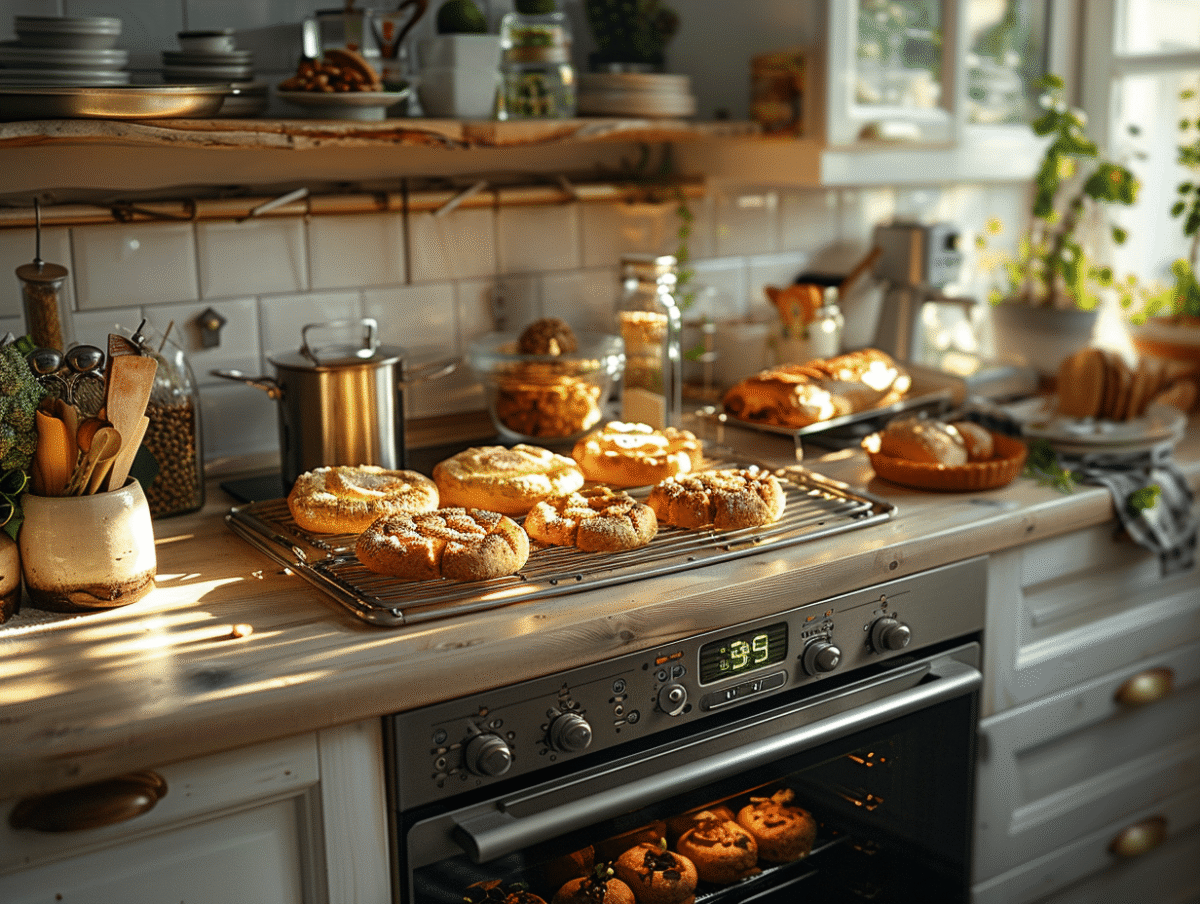
Reheating food in the oven without cooking it requires special attention to the temperature used. The heat must be sufficient to make the meal pleasant to the palate, but gentle enough to avoid any further cooking that would alter the texture and taste. This is a common challenge for those looking to revive leftovers or prepare dishes in advance. Mastering this technique not only ensures the preservation of the organoleptic qualities of your dishes but also contributes to safe food consumption. The key lies in choosing the right temperature and adhering to the heating time.
Mastering your oven’s temperature for optimal reheating
How to set the oven temperature to reheat without cooking your food? This question frequently arises in kitchens, whether domestic or professional. The oven, essential for cooking and reheating, must be handled with precision. For this, an ideal temperature for reheating is 70°C. At this temperature, dishes are heated without their structure being altered, thus preserving their moisture content and taste qualities.
The temperature of 70°C is particularly suitable for a wide variety of dishes. Whether it’s pieces of meat, quiches, or tarts, setting the oven to this temperature allows food to be reheated without the risk of overcooking. For a convection oven, this setting ensures an even distribution of heat, which is essential for uniform heating of the dishes.
Consider the type of oven available and adjust the temperature accordingly. A professional oven offers advanced features to prevent dehydration and overcooking, as well as to maintain a more stable temperature. Use this equipment to its full potential to ensure optimal reheating of your culinary preparations, avoiding temperature fluctuations that could compromise the quality of your dishes.
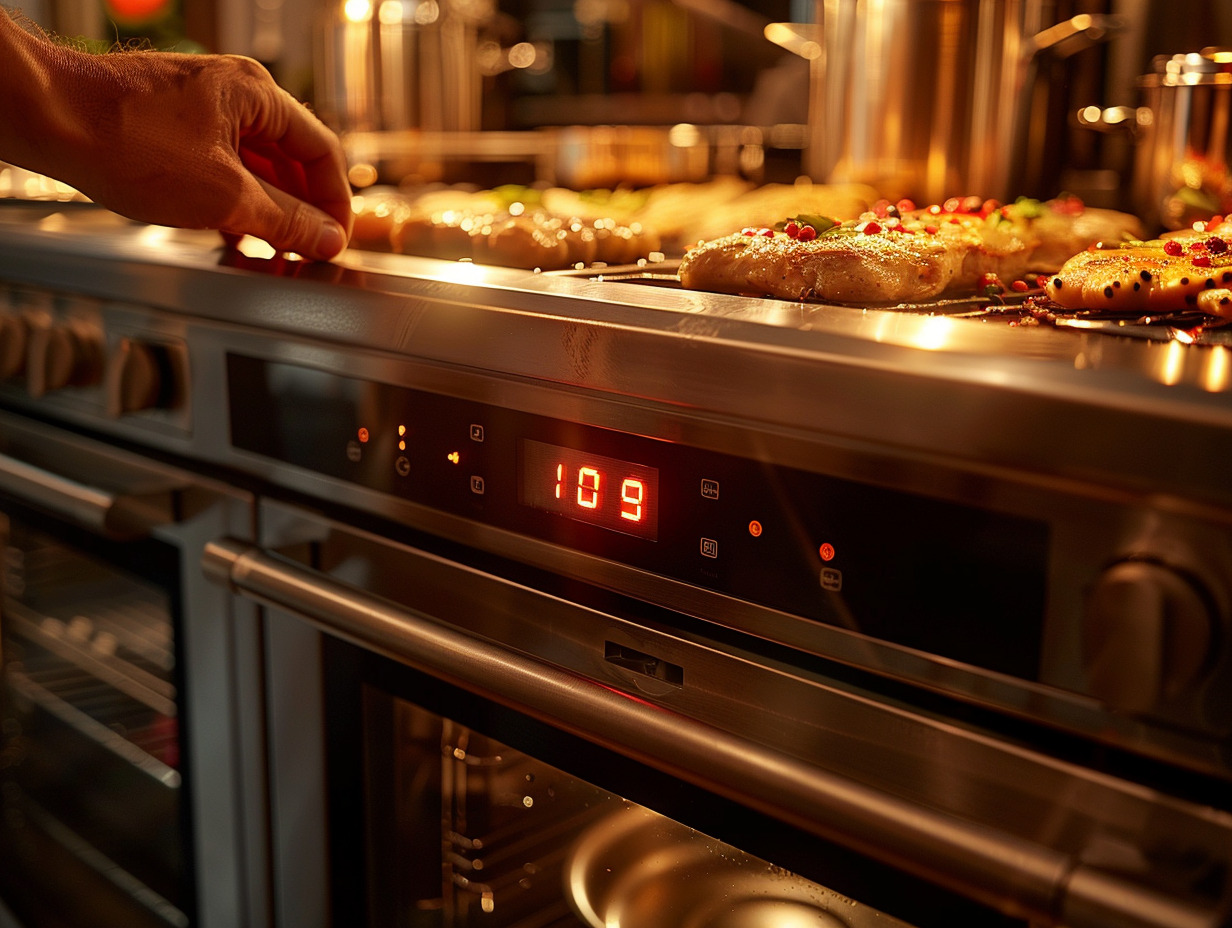
Practical tips for reheating without cooking your different types of food
Reheating a catering dish or a homemade preparation requires a mastered technique tailored to each type of food. For rice, for example, adding water and a bouillon cube during reheating helps restore its initial moisture. Prefer a temperature of 150°C to give the rice its proper texture without drying it out.
As for pieces of meat, the reheating time varies depending on the size and nature of the piece. However, a reheating temperature not exceeding 70°C is recommended to avoid continuing the cooking process. Wrapping the meat in aluminum foil can facilitate a gradual temperature rise while preserving its juiciness.
Delicate dishes like poached eggs require special attention: too intense reheating could harden the yolk. Opt for a salted water bath at 70°C to ensure gentle heat. For galettes des Rois, quiches, or tarts, a temperature of 70°C without covering is sufficient to reheat without altering the texture of the crust or fillings. For these preparations, using a convection oven promotes an even distribution of heat, thus ensuring uniform reheating.
Keep these tips in mind and adjust your oven settings according to the dish to be reheated to achieve the best results without resorting to the microwave, often criticized for its impact on the texture and taste of food.