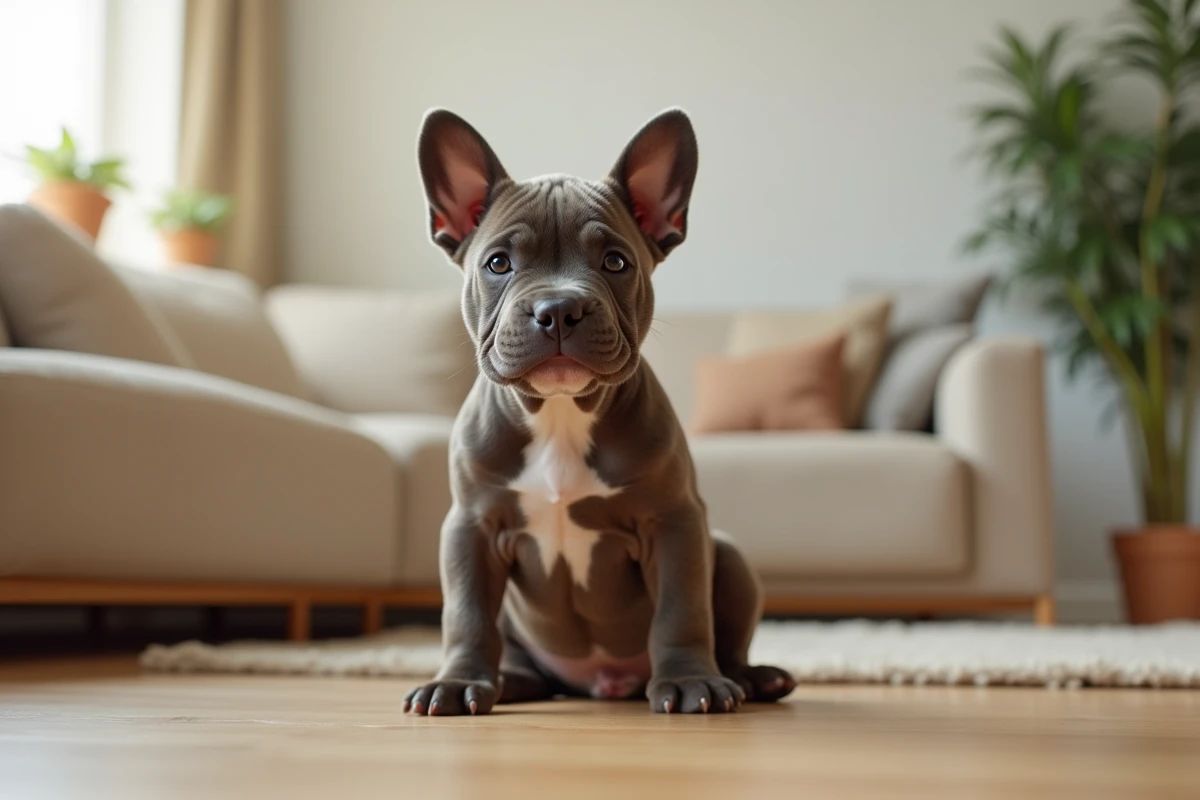
An American Bully or Exotic Bully puppy should not be chosen based on an Instagram photo. It should be selected after seeing its parents move, breathing the air of the breeding facility, and asking specific questions about the lineage. The difference between a healthy companion and a dog that frequently visits the vet often lies in the details that many beginners overlook, even before the reservation.
Veterinary diagnosis and risk of reclassification: what holds back in France
Before discussing morphology or temperament, we must address a regulatory point that conditions everything else. The American Bully is not recognized by the Société Centrale Canine as a distinct breed. In practice, this means that each dog can be subject to a morphological diagnosis by an accredited veterinarian starting at one year old.
Since 2023-2024, several DDPP (departmental veterinary services) have reported increased vigilance regarding Bully dogs with very exotic types. An extremely shortened muzzle, pronounced skin folds, or reduced mobility can lead to an association with Staffordshire-type dogs, along with the constraints that follow: declaration at the town hall, mandatory muzzle, specific insurance.
The AFVAC (French Association of Veterinarians for Companion Animals) explicitly recommends avoiding hyper-typed lineages to limit the risks of reclassification. For someone buying their first puppy, this information should guide the choice of breeder before any aesthetic considerations. You can learn more on Attitude Canine about the selection criteria suitable for these breeds.
Exotic Bully and brachycephaly: understanding health limits before buying
The Exotic Bully is appealing due to its compact silhouette and flat face. The problem is that this aesthetic pushes certain lineages towards respiratory extremes incompatible with a normal life.
In the Netherlands, a ruling from the Court of Appeal in The Hague (March 2023) confirmed the ban on certain extreme crossings among brachycephalic breeds for animal welfare reasons. Norway has followed a similar logic. These decisions do not specifically target the Exotic Bully, but French associations like the Fondation 30 Millions d’Amis cite them as examples of at-risk types.
An Exotic Bully with a muzzle measuring less than a few centimeters will likely have chronic respiratory difficulties. We are talking about permanent snoring, heat intolerance, and quick fatigue during exertion. Veterinary costs related to brachycephalic syndrome (soft palate, nostril stenosis) can represent significant amounts over the dog’s lifetime.
What to check in an Exotic Bully puppy
- Resting breathing should be silent. A puppy that snores while awake at eight weeks already presents a respiratory warning sign.
- Nostrils should be open and well-formed. Pinched or nearly closed nostrils indicate probable stenosis.
- The puppy should move without difficulty, without visible limping or joint stiffness, even over short distances.
Choosing an American Bully breeder: concrete checks on-site
A visit to the breeding facility remains the decisive moment. One does not choose a puppy from a catalog, and feedback varies greatly from one breeding to another regarding actual conditions.
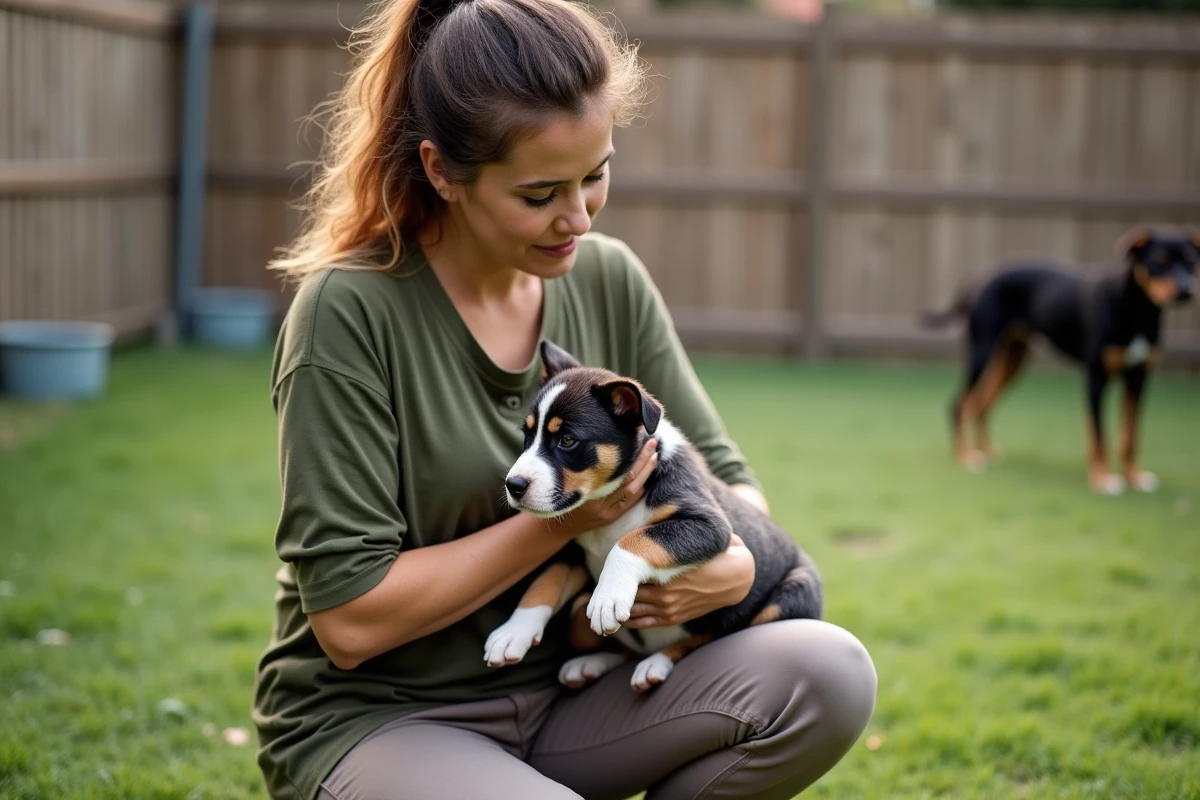
The first reflex: observe the parents. A serious breeder shows the mother interacting with her puppies without hesitation. If you can only see the puppy isolated in a pen, it is a weak but recurring signal from problematic breeding facilities. The father is not always on-site, but recent photos, a readable pedigree, and health test results should be available.
Documents to request before signing
- The veterinary certificate of good health for the puppy, dated less than five days before the transfer.
- Identification by microchip, mandatory in France before any sale.
- An up-to-date vaccination record (minimum initial vaccination) and the planned reminder schedule.
- A sales contract mentioning the declared breed, price, and warranty conditions in case of a hidden defect.
A point often overlooked: ask if the breeder has ever had puppies reclassified during the morphological diagnosis. The answer, and especially the way it is formulated, says a lot about the transparency of the breeding.

Temperament of the American Bully puppy: what to observe at the first meeting
The American Bully is known for its sociable character and attachment to the home. In the puppy, these traits can be spotted within the first few minutes of contact.
A puppy that spontaneously approaches a stranger without aggression or panic shows good behavioral balance. In contrast, a puppy that is frozen, trembling, or growling at the approach of a hand signals a lack of early socialization. This deficiency at this age falls under the breeder’s responsibility.
You can also test the reaction to noise: a moderate clap of hands. The puppy may startle (a normal reaction), but it should quickly return to explore the source of the sound. A puppy that runs away and does not return will need more extensive socialization work, which requires time and experience.
The training of the American Bully relies on positive reinforcement. This dog is sensitive to excessive authority. Relying on food rewards works particularly well with this breed, known for its natural greed.
Insurance and veterinary budget: anticipating real costs
One point that many first-time buyers discover too late: pet health insurance for a Bully costs more than for a standard-sized dog. Insurers factor in the brachycephalic risk (especially for the Exotic Bully) and joint predispositions in their rates.
Before purchasing, contact your insurer to verify that the declared breed is indeed covered. Some companies exclude breeds not recognized by the FCI or apply high deductibles on respiratory pathologies. It’s better to know this before signing the sales contract.
The annual veterinary budget for a healthy Bully remains comparable to that of a medium-sized dog, but the slightest respiratory or joint complication can drive up the bill. Setting aside a financial reserve for care is not a luxury; it is a necessity to fully support your pet’s life.