Exploring painting offers amateur artists a universe of limitless creativity. From choosing brushes to mixing colors, every detail matters in expressing one’s artistic vision. While some favor traditional techniques like watercolor or oil, others venture into more experimental methods, such as pouring or knife painting. Mastering these techniques requires patience and practice, but it opens the door to personal expression and a unique style. Workshops and online tutorials are excellent resources for aspiring painters eager to refine their art.
Exploring the Basics of Painting for Amateur Artists
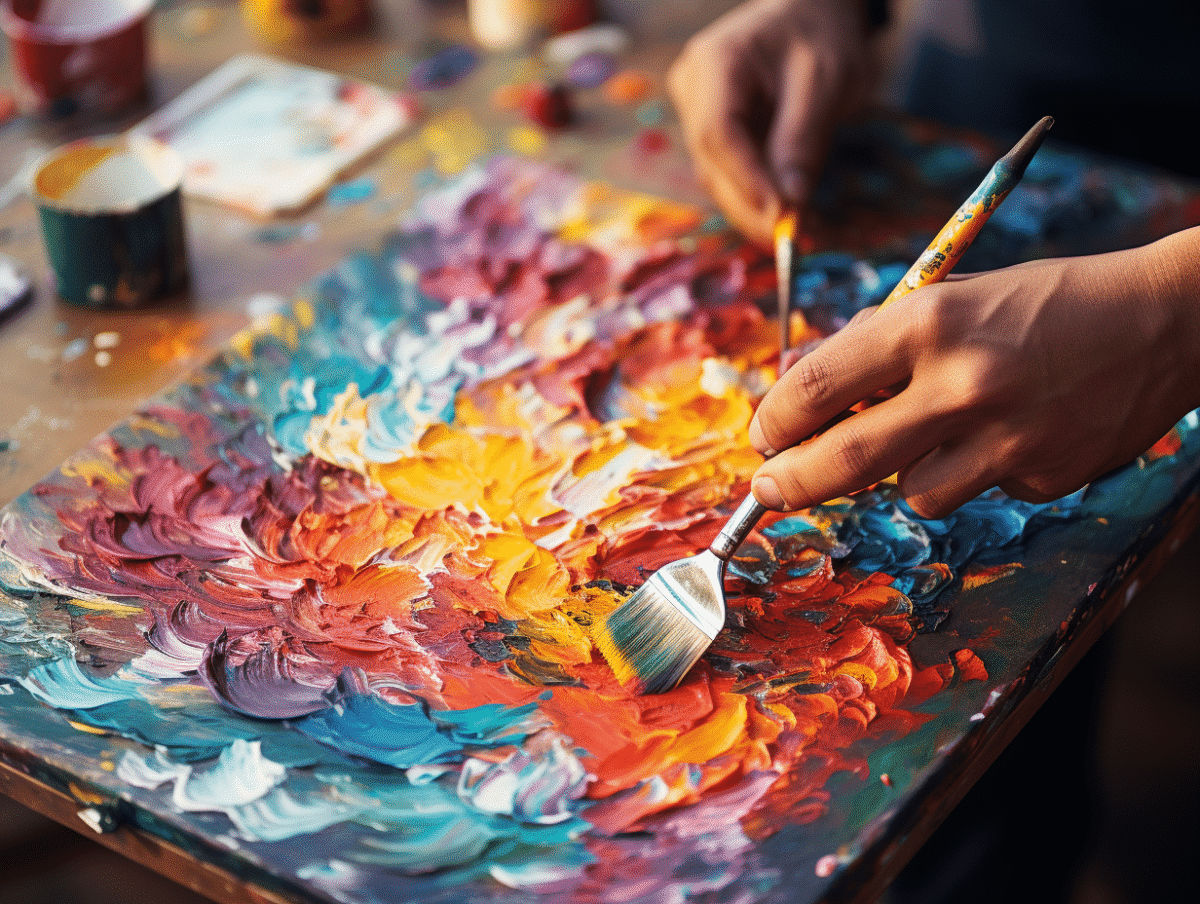
Essential art materials, painting remains the first choice for budding artists. The variations are numerous: from acrylic paint, valued for its versatility and quick drying time, to watercolor, which offers remarkable transparency and fluidity, and gouache, which sits between the two with its ability to be both opaque and soluble. Each type of paint opens a door to various styles and effects, whether it’s splash art or more delicate finishes on canvas.
Brushes, a natural extension of the artist’s hand, must be chosen with particular care. They come in various shapes and sizes, each suited to a specific painting technique. For precise painting, opt for fine-tipped brushes. Conversely, for covering large areas, wide and flat brushes will be your allies. Never forget that maintaining these tools is crucial for ensuring optimal paint application.
The choice of surface should not be overlooked. Canvas is the classic artistic support, but innovation and creativity allow exploration of other horizons such as walls, clothing, or even wallpaper splattered with paint. Each support reacts differently to the materials used and can radically transform the final rendering of a work.
When it comes to acrylic paint, it is often chosen for splash art, a realm where unpredictability and dynamism reign supreme. Less conventional tools, such as toothbrushes or kitchen utensils, can be repurposed to add texture and relief to your creations. For street art enthusiasts, spray paint is an essential option, allowing for large-scale works with striking graffiti effects. Geopolitis of color, each technique offers endless possibilities, inviting an endless exploration of artistic expression.
Techniques and Tips for Developing Your Artistic Style
Mastering the art of splash painting begins with understanding your materials. Using brushes is not the only way to achieve stunning results. It is possible to innovate with toothbrushes or everyday tools such as sticks, spoons, and straws, which allow for original paint projection and the creation of unique patterns. This approach, popularized by Jackson Pollock, a leading figure of the abstract expressionist movement, reminds us that experimentation is at the heart of artistic expression.
The spray paint is a preferred tool for those aspiring to create graffiti-style works. As for the stencil, it offers meticulous control over paint application, allowing for precise and repetitive designs. These methods are conducive to exploring new forms of art, encouraging artists to step outside the box and personalize their works.
The advent of digital art opens up even more horizons. Software like Photoshop or applications like Procreate allow for simulating paint splashes without the physical inconveniences of traditional mediums. These digital tools are powerful allies for experimenting with colors and shapes, offering an infinite palette of creative possibilities. Artists like Angela Mckay and Rich Armstrong perfectly illustrate the use of gouache and digital splashes in their respective training.
The diversification of supports such as paint-splattered wallpaper or splash-painted clothing demonstrates that painting can transcend the classic canvas and invade our everyday space. These innovative applications, extending to Cape Cod-style floors, reflect a trend where art and interior design meet, creating vibrant and dynamic pieces. Take these inspirations and make them your artistic playground to develop a style that is uniquely yours.