
Following local sports in the regional daily press often means reading a score, a ranking, and then moving on. Match reports dominate, and in-depth topics about the sporting life of an area remain rare. A regional sports magazine operates differently: it takes the time to tell what happens before and after the whistle, in clubs, management committees, and municipal gyms.
Regional sports and local press: what dailies do not cover
Major local media (Sud Ouest, La Voix du Nord, Le Progrès) cover sports continuously. Their dedicated pages publish results, live updates, and briefs related to major competitions. This format meets a need for immediacy but overlooks several aspects of sporting life.
Amateur clubs, for example, only appear in these columns during an achievement or a news event. Their daily operations (recruiting volunteers, seeking local sponsors, negotiating with the town hall for gym slots) remain invisible. A regional sports magazine that focuses on this niche covers an angle that no one else addresses in depth.
This positioning is precisely what the sports magazine Sportsland occupies, with an editorial line aimed at the actors of sports in the South-West, from youth sections to club leaders and local authorities.
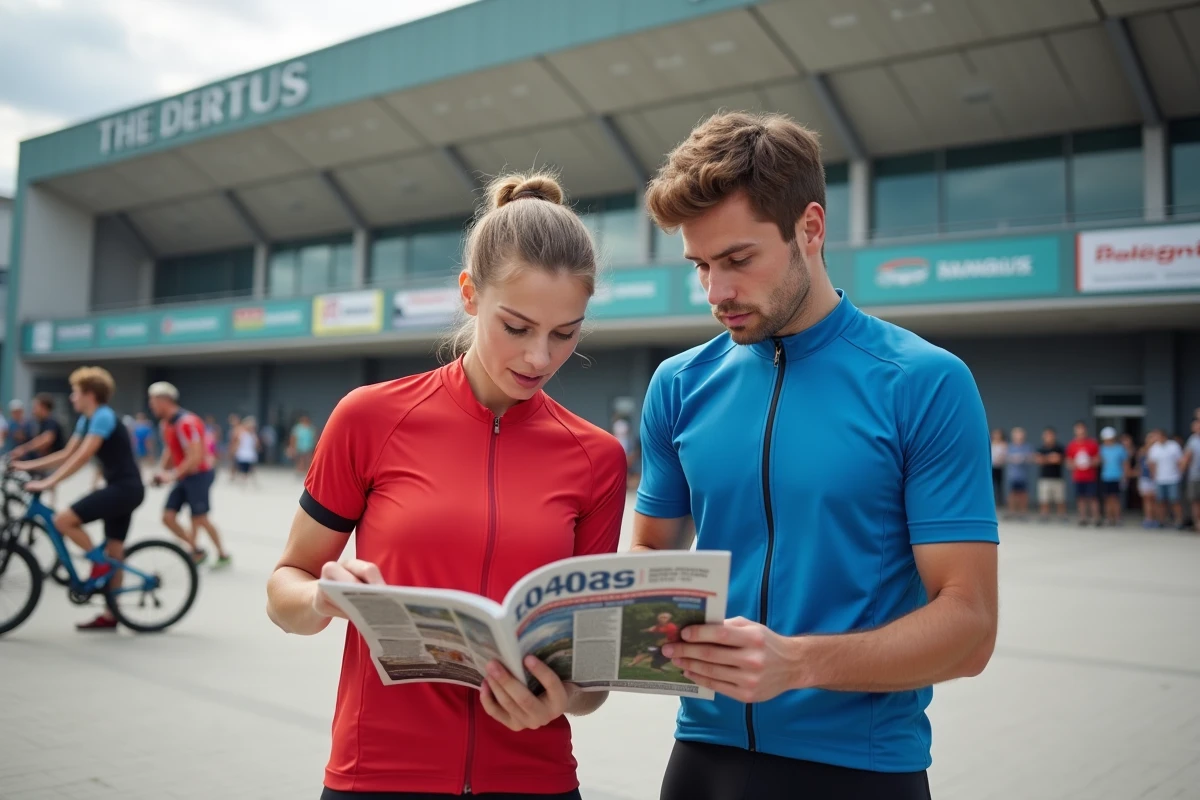
Economic backstage of amateur sports: an underutilized editorial angle
Have you ever wondered how a third division handball club finances its travels? The answer varies from one area to another, but the topic is rarely addressed in the mainstream press. The budgets of amateur clubs, municipal subsidies, partnerships with local businesses form an unknown economic ecosystem.
The financing of amateur clubs is a standalone editorial topic. It touches on local politics, land use planning, and the budgetary choices of local authorities. A regional magazine can dedicate investigations, profiles of volunteer leaders, and comparisons between disciplines to this subject.
What distinguishes a field report from a results brief
A regional daily publishes a brief after a Fédérale 2 rugby match. The score, the scorers, possibly a quote from the coach. The regional magazine, on the other hand, can recount the week that preceded it: the coach adjusting his lineup because three players work on Saturdays, the treasurer negotiating the bus fare.
The field report provides context to a sports result. It transforms a score into a narrative. This approach requires time, which the daily rhythm of a newspaper does not always allow.
Regional sports magazine: what content brings real value to the reader
Differentiation does not only come from the tone or length of articles. It relies on the type of topics covered. A useful regional magazine addresses themes that the reader cannot find anywhere else in their area.
- Life of amateur clubs: associative governance, infrastructure projects, youth training, licensing and membership policies
- Local sports economy: budgets, sponsors, public subsidies, impact of sports events on the economic fabric of a city or department
- Field usage: organization of training sessions, management of slots in public facilities, cohabitation between disciplines in the same sports complex
- Profiles and journeys: volunteers, sports educators, former athletes transitioned into coaching or local business
This type of content does not compete directly with daily press. It complements it. The reader who checks their newspaper for weekend results can then read an in-depth feature in a magazine like Sportsland to understand the stakes behind those results.

Niche sports press versus mainstream media: complementarity rather than competition
The online sports editorial landscape is dominated by powerful brands. L’Équipe covers national and international sports continuously. Regional dailies (Sud Ouest, Le Progrès) cover local sports in their dedicated pages. Alongside, players like Sport Business Club occupy a very specific niche around sports marketing and events.
A regional sports magazine does not compete with any of these players on their own turf. It positions itself in an intermediate space: closer to the field than L’Équipe, more in-depth than a daily sports page, and more accessible than a B2B media like Sport Business Club.
Why the local reader needs multiple sources
A supporter of a Pro D2 club probably checks their regional daily’s website for the match report. To understand the club’s recruitment strategy or the future of its training center, they need another type of media.
The regional magazine fulfills this function by publishing long, documented content focused on local dynamics. The editorial depth compensates for the lack of real-time coverage.
Sports in the region and local engagement: a loyal but demanding readership
The audience of a regional sports magazine is not the same as that of a national sports news site. They know the clubs, the players, sometimes the leaders. They immediately spot an approximation or a topic treated from afar.
The credibility of a regional magazine relies on its real proximity to the field. Articles must reflect a deep knowledge of the local sports fabric: names of associations, history of rivalries between clubs, specificities of a municipality’s facilities.
This demand for precision also constitutes a barrier to entry for major national media. A journalist based in Paris cannot cover the sports policy of a community in Béarn or the tensions surrounding a multi-sports hall project in the Landes with the same level of detail as a writer rooted in the area.
The regional sports magazine derives its legitimacy from this physical presence, this ability to attend general assemblies, to discuss with educators in the locker rooms, to document what news algorithms never bring to the top of the page.