
The regulated fee for an authentic will is 113.19 euros excluding tax, or 135.83 euros including tax. This amount, set by Article A. 444-60 of the French Commercial Code, covers only part of the final bill. Several additional charges may be added, and their amount varies depending on the type of will chosen and the services requested from the notary.
Regulated fees and services outside the fee schedule: the technical distinction
The fee of 113.19 euros excluding tax covers the drafting of the authentic instrument itself. It is a fixed fee, identical at all notary offices across France. This price is not an all-inclusive package.
In addition to this fee, the notary may charge for supplementary services at freely set rates. In-depth estate planning advice, analysis of a blended family situation, or the drafting of complex clauses (conditional bequests, split ownership, specific obligations) may incur fees that are not included in the regulated fee schedule. These fees must be covered by an agreement signed before the service is provided.
To distinguish the costs of setting up a notarized will from those associated with settling an estate, bear in mind that all drafting and filing costs are incurred during the testator’s lifetime. Estate settlement costs arise at a later stage, after death.
Registration with the FCDDV and safekeeping: two separate charges often confused

Depositing a will with a notary ensures that the original is kept among the notary’s records. Registration with the Central Register of Last Wills and Testaments (FCDDV) serves a different purpose: it flags the document during estate settlement, allowing any notary handling the estate to locate it.
These two operations incur separate fees. Registration with the FCDDV has its own charge, billed to the testator or included in the post-drafting formalities. For a holographic will deposited with a notary, registration may incur additional costs beyond simply keeping the document safe.
A will kept at home, even if perfectly drafted, may never be found. The FCDDV does not store the contents of the will: it records only that the will exists and the name of the notary holding it. Informing someone you trust where it is kept remains a recommended additional precaution, according to the official Service-public.fr website.
Holographic will deposited with a notary: actual cost compared with an authentic will
A holographic will costs nothing to draft, since the testator writes it themselves. Depositing it with a notary later, however, incurs safekeeping and FCDDV registration fees. After the testator’s death, an official record of the will’s opening and description is required: this is a separate regulated fee from that charged for an authentic will.
Depositing the will and drawing up the record of its opening are two acts billed at different times: the first during the testator’s lifetime, the second after their death. The fact that they appear in the same fee schedule does not mean they are paid at the same time.
Strict formal requirements apply to a holographic will:
- The document must be written entirely by hand by the testator, from beginning to end, without using a word processor or typewriter.
- The full date (day, month, year) must be handwritten by the testator; otherwise, the document is invalid.
- The testator must sign the document by hand at the end. Initials alone are not sufficient.
A will typed on a computer and then signed does not meet these requirements and will be rejected. This formal requirement leads some testators to choose an authentic will to ensure their wishes are legally valid.
When an authentic will is the right choice for estate planning
The additional cost of an authentic will compared with a deposited holographic will is justified in several specific situations. The notary drafts the instrument as dictated by the testator, in the presence of two witnesses or a second notary, significantly reducing the risk of a challenge.
An authentic will is particularly suitable in complex situations:
- A blended family with children from different relationships, where the division between forced heirs and beneficiaries requires careful drafting.
- A testator with a physical impairment (difficulty writing) or whose mental capacity might later be challenged by heirs.
- A bequest to an association or foundation, which requires specific wording to be enforceable.
- Appointment of an executor with extensive powers, whose scope must be precisely defined.
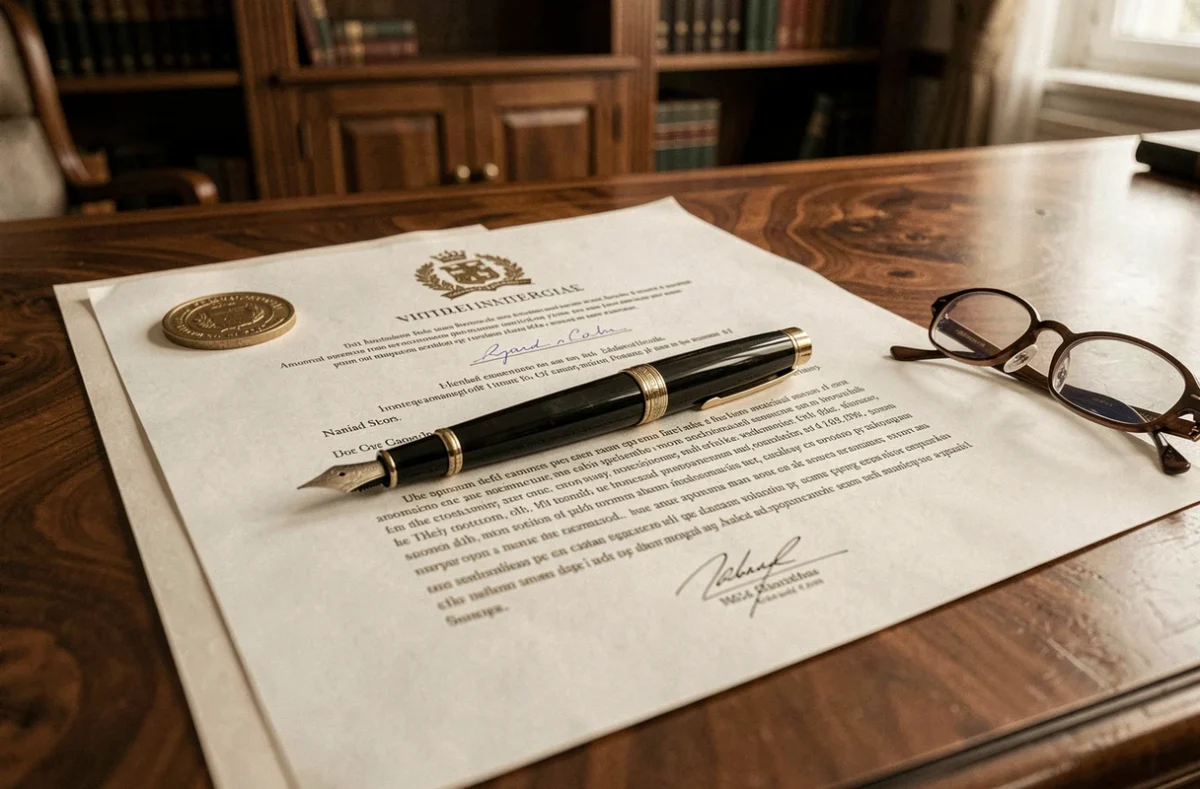
In these cases, the regulated fee and any advisory fees represent a modest investment compared with the risk of a poorly drafted holographic will being invalidated. We find that inheritance disputes involving formal defects in holographic wills remain common in civil courts.
Mystic will: an uncommon form with specific fees
A mystic will, rarely used in practice, combines private drafting with delivery to a notary in a sealed envelope in the presence of witnesses. Its cost includes a deposit fee separate from that for an authentic will, plus FCDDV registration fees.
This form does not offer the drafting safeguards of an authentic will, since the notary does not review its contents. It may still appeal to testators who want their wishes to remain absolutely secret while benefiting from notarial safekeeping.
Choosing between the three types of will comes down to balancing cost, legal certainty, and confidentiality. The fee of 135.83 euros including tax for an authentic will is the minimum price, to which each testator adds the services required by the complexity of their estate. Checking the itemized charges before signing the fee agreement is the only reliable way to keep the final bill under control.