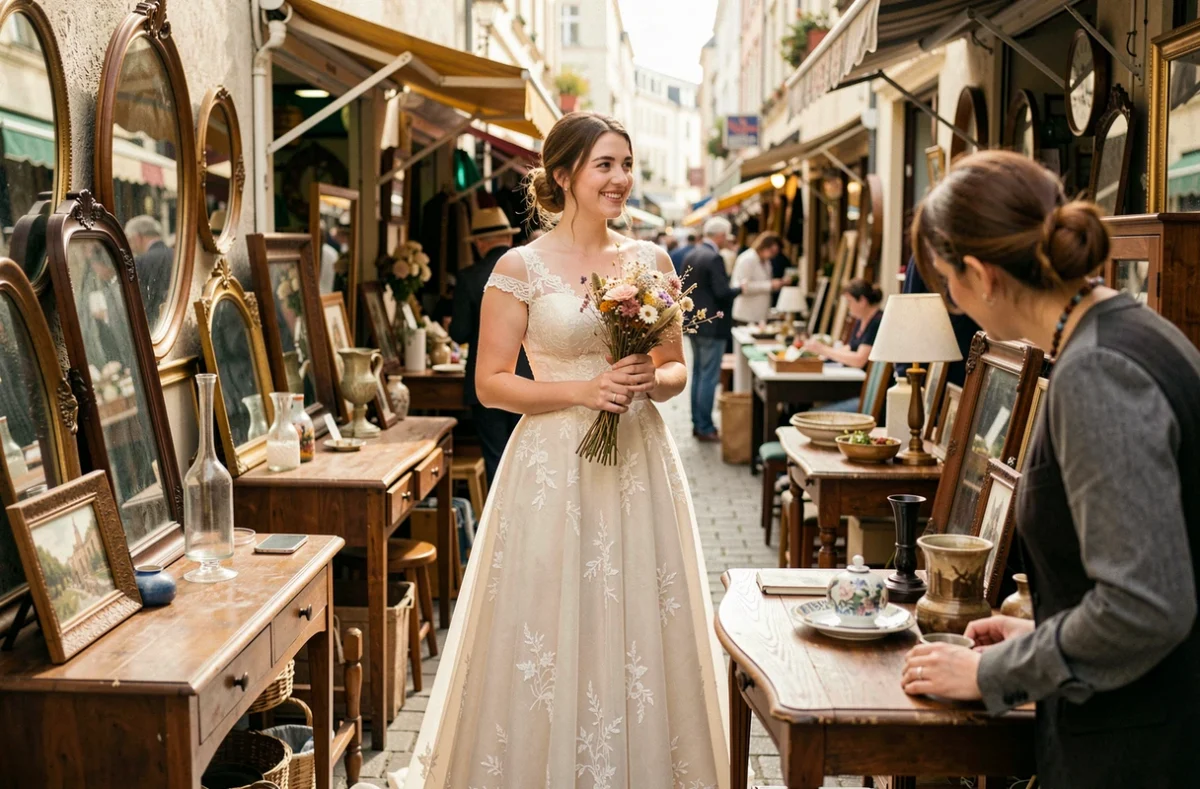
A couple retrieving dried floral arches after a ceremony from the previous weekend, another exchanging their centerpieces for a calligraphy service for the menus: bartering applied to weddings goes beyond just hunting for good deals. We are talking about a parallel circuit where each service or item circulates among future spouses, often without financial transactions, with logistical and tax constraints that few articles address.
Bartering between newlyweds and the DAC7 directive: what taxation changes
When exchanging a batch of candle holders for a string of lights, one does not think about taxation. Pure bartering (goods for goods, without payment) remains outside the realm of traditional second-hand sales.
The nuance arises as soon as an online platform acts as an intermediary. The European DAC7 directive requires platforms to report their users’ activities to the tax authorities. For the sale of goods, the exclusion is based on a double threshold: fewer than 30 transactions and an annual amount not exceeding 2,000 euros. Services and certain rentals may be reportable from the very first transaction.
In practical terms, if one resells their wedding decorations on a general marketplace and exceeds these thresholds over the course of the year, the platform will pass the information to the tax authorities. On a specialized site like troc-mariage.com, exchanges often remain below these ceilings, but it is advisable to keep a written record of each transaction to justify the non-commercial nature of the operation.

Reusable tableware and the AGEC law: smart bartering for the reception
Disposable tableware has long been the go-to for budget receptions. This reflex costs more than one might think, and regulations are making it less and less viable.
The AGEC law sets a target of 10% of reusable packaging by 2027. Several regions have been experimenting with deposit systems for glass since 2025. For a wedding, this opens up a concrete avenue: going through resource centers, local associations, or certain caterers that offer tableware, jars, and reusable containers with organized returns.
Bartering also works between individuals. One might lend their 120 ceramic plates sourced from a flea market in exchange for the use of a van for transport. This type of exchange, difficult to organize alone, is structured within local Facebook groups or on wedding-specific forums.
Reception items where reuse lowers costs
- Table containers (jars, vases, candle holders): often sold as a complete set by couples from the previous season, they cost a fraction of the new price
- Table linens (tablecloths, runners, cloth napkins): since January 2025, professional event textiles are included in separate sorting streams, prompting rental companies to part with stock at reduced prices
- Signage (directional signs, chalkboard menus, seating plans): customizable elements that can be sanded, repainted, and reused without loss of quality
Wedding dress and suit: second-hand that changes the budget
The wedding dress represents a significant portion of a wedding’s textile budget. Buying a second-hand dress allows access to otherwise unattainable designers, for a fraction of the retail price.
The point of caution lies in alterations. A second-hand dress almost always requires a visit to a seamstress. This cost should be budgeted from the start to avoid unpleasant surprises. Returns vary on this point: some simple alterations (hem, size adjustment) remain affordable, while a structural modification can significantly increase the bill.
For the suit, the second-hand market is less developed. High-end thrift stores and specialized consignment shops offer quality pieces. Direct bartering (suit for photography service, for example) also exists, although it requires more searching.
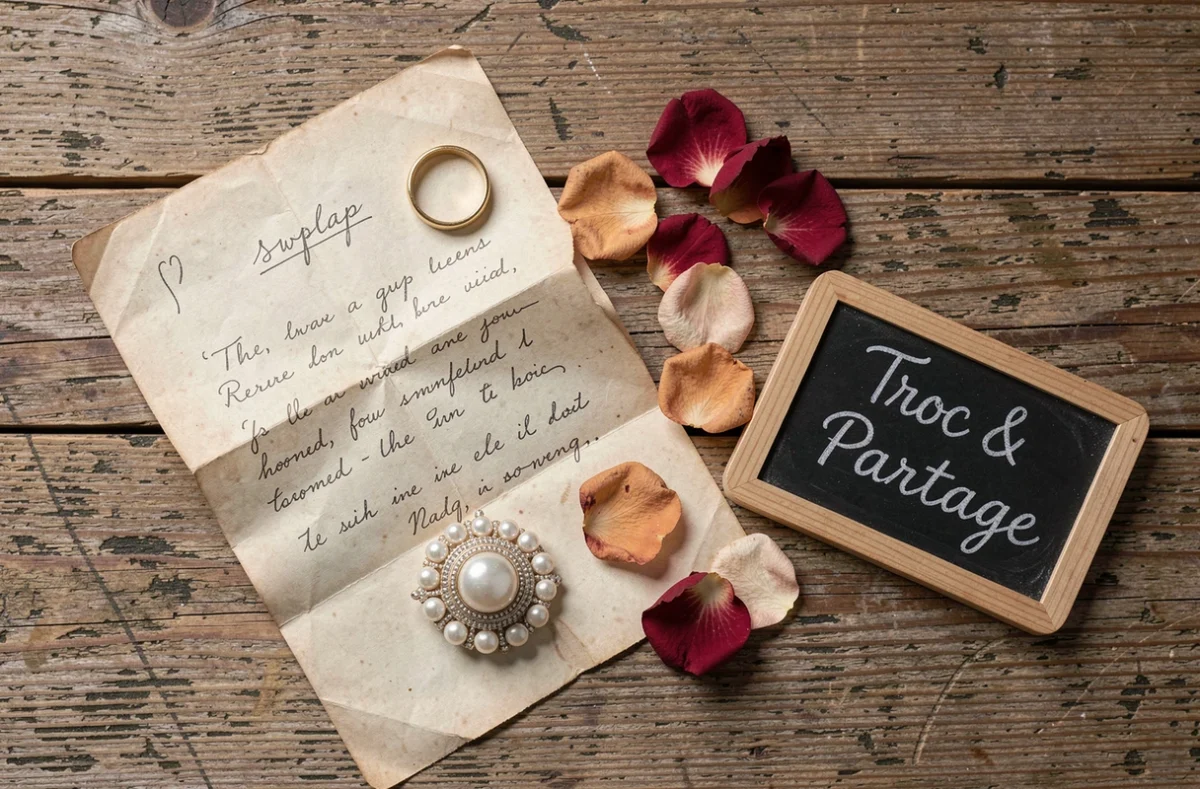
Floral decoration and skill bartering: reducing the flower budget
Fresh flowers represent a often underestimated expense. Bartering a skill for floral arrangements allows one to bypass the prices of event florists.
A graphic designer offering to create invitations in exchange for bouquets made by a friend who is a horticulturist, a musician playing during the cocktail hour in exchange for making boutonnieres: these arrangements work when both parties formalize the exchange in advance. A written agreement, even informal, avoids misunderstandings about the scope of the service.
Dried flowers and reuse between ceremonies
Dried or stabilized flower arrangements lend themselves particularly well to the second-hand circuit. Unlike fresh flowers, they do not deteriorate between two weddings spaced weeks apart. They can often be found on resale platforms among newlyweds, often with the arch or support included.
Home drying also allows one to recycle their own bouquets into decorative elements for the home after the ceremony, giving the flowers a second life at no additional cost.
Wedding bands and guest gifts: areas where bartering remains marginal
Not all items lend themselves to bartering or second-hand. Wedding bands, due to their symbolic dimension, are rarely exchanged between strangers. The second-hand market exists for jewelry, but the approach remains personal and less structured than for decorations.
For guest gifts, homemade items effectively replace new purchases: self-poured candles, seed packets, small jars of jam. One then trades time for budget, which requires anticipating production several weeks before the big day.
An economical wedding through bartering and second-hand does not require sacrificing the quality of the reception or ceremony. It demands time, organization, and a good dose of pragmatism to identify the areas where exchange makes sense, and those where it is better to invest directly.