
Brandade de morue refers to a warm emulsion of salted cod (then desalted) and olive oil, worked until a creamy texture is achieved. The original recipe, linked to the region of Nîmes, does not contain potatoes. This detail changes the technique, the result in the mouth, and the way to choose ingredients.
Nîmes brandade, Provençal brandade, Portuguese version: three different dishes
The word “brandade” encompasses preparations that differ by region. The strict Nîmes brandade is an emulsion of shredded cod, olive oil, and sometimes a bit of milk, without potatoes. The texture resembles a dense, almost airy mousse.
The Provençal version, the most common in French households, includes a potato purée. The result is thicker, more nourishing, and easier to gratin in the oven. This is often what you find in supermarkets under the name “brandade de morue.”
The Portuguese brandade (bacalhau à Brás, for example) starts with the same salted fish but combines it with scrambled eggs, fried matchstick potatoes, and black olives. The cooking technique and final texture have little in common with the Nîmes emulsion. To master the true recipe for brandade de morue, one must first choose which version to replicate, as the methods and ingredients diverge from the start.
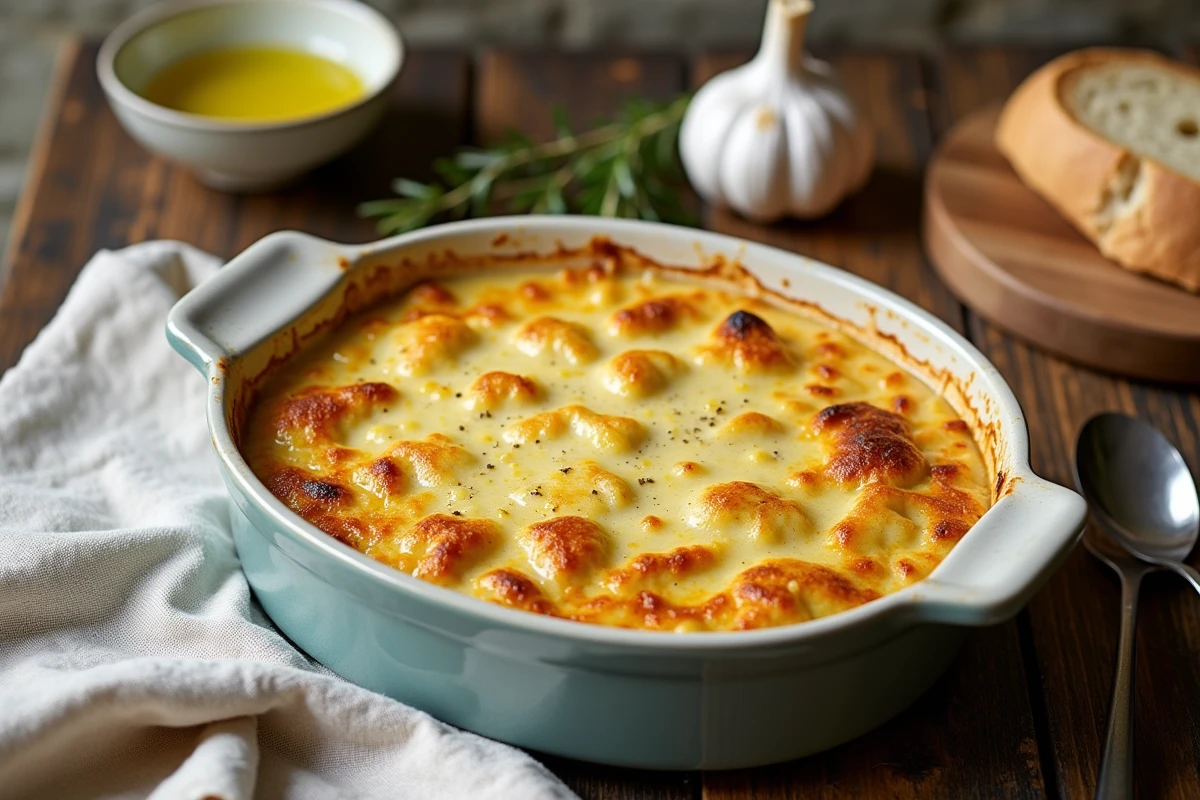
Desalting the cod: the phase that determines the entire dish
Desalting is the only step that cannot be corrected. Improperly desalted cod makes the dish inedible, either too salty or, conversely, bland and characterless if the fish has soaked too long in stagnant water.
Effective desalting method
Place the cod in a large volume of cold water, skin side up, in the refrigerator. Change the water at least three times over a period that depends on the thickness of the fillets: thin pieces require less time than thick back cuts.
The reliable test involves taking a small piece, poaching it for a few minutes in unsalted water, then tasting it. If the salt is still too present, extend the soaking. This check avoids unpleasant surprises once the preparation is underway.
Cooking the fish before emulsifying
After desalting, poach the cod in simmering water (never at a rolling boil) or in milk. The milk adds a base of sweetness that facilitates emulsification. Remove the fish as soon as the flesh flakes apart under the pressure of a fork. Drain it carefully and remove all bones and skin.
Emulsifying with olive oil: the technical gesture of homemade brandade
Brandade is an emulsion, not a purée. The difference lies in the method of incorporating the olive oil. Drizzle the oil in a thin stream over the still-warm cod, working the mixture with a wooden spoon or spatula in a saucepan over very low heat.
The oil must be absorbed gradually, like for a mayonnaise. If you pour too quickly, the emulsion will break, resulting in an oily and grainy mixture. Optionally add a few spoonfuls of warm milk to soften the texture between oil additions.
For the version with potatoes, incorporate a smooth purée (no chunks) once the base emulsion is successful. The potatoes do not replace the olive oil; they complement the texture. An excess of purée compared to the cod results in a bland dish that loses the identity of brandade.
- Reference proportion for the version with purée: about as much cod as potatoes by weight, adjusted to taste
- Olive oil: a fruity green oil adds bitterness, a ripe sweet oil softens the overall flavor
- Garlic: one or two crushed cloves, added at the beginning of the emulsion, are enough to flavor without dominating
- Milk: a few warm spoonfuls to bind, never cold (risk of thermal shock that breaks the emulsion)

Adapting brandade de morue to current constraints
Traditional salted cod comes from North Atlantic cod, a species whose stocks have faced significant pressures. Checking the geographical origin and the mention of sustainable fishing on the fish label is a reflex to adopt before purchasing. Fillets bearing an eco-label or a fishing zone indication allow for a more informed choice.
Allergens and labeling
Brandade contains fish and milk, two of the fourteen allergens that must be declared in the European Union. If you are preparing this dish for guests, mention it. For a lactose-free version, replace the milk with a bit of the fish poaching water. The result remains creamy as long as you compensate with an extra drizzle of olive oil.
Actual preparation time
Many online recipes claim a brandade ready in twenty minutes. This time does not account for desalting (which takes at least several hours) or poaching. The actual time from start to finish far exceeds half an hour of active work, not counting the waiting time for desalting. Planning the desalting the day before simplifies organization on the day itself.
Storage and reheating of prepared brandade
Homemade brandade can be stored in the refrigerator in an airtight container for two to three days. Beyond that, the texture degrades and the fish flavor intensifies unpleasantly.
Freezing works well for the version with potatoes. Portion before freezing to facilitate thawing. Reheat in a moderate oven with a drizzle of olive oil on the surface to prevent drying out. The microwave can be a quick fix but tends to make the texture rubbery around the edges.
- In the refrigerator: cover with cling film to limit oxidation
- In the freezer: consume within the following weeks to preserve flavor
- In the oven for reheating: moderate temperature, add a bit of fat, briefly gratin at the end of cooking
Homemade brandade relies on a sequence of simple gestures, none of which tolerate approximation. The choice of fish, the patience of desalting, and the consistency of the olive oil emulsion are the three points that separate a successful dish from a bland fish purée.